

Share This Story, Choose Your Platform!
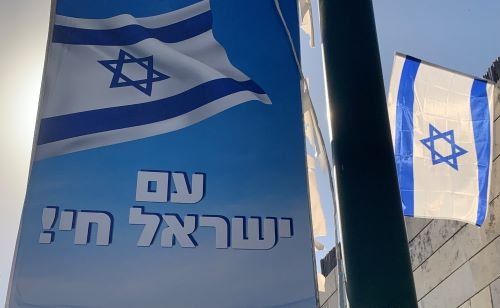
According to the Hebrew calendar, the celebration of the 77th Independence Day of the State of Israel should have begun on April 30, 2025 and continued May 1. But the weather put a huge and terrible spanner in the works.
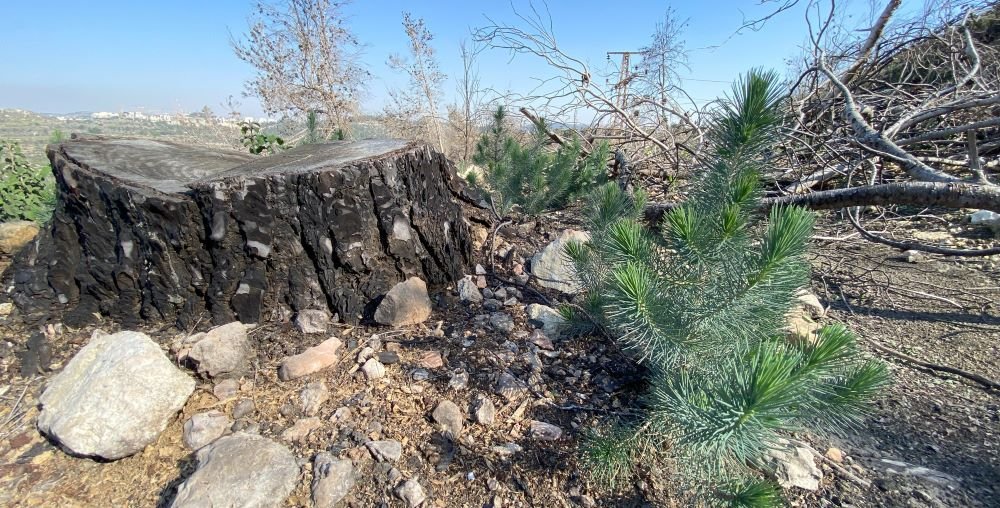
Dry, hot winds, which are typical for this unpredictable time of year, reached speeds of up to 80 kilometers per hour in Jerusalem. Arsonists had expressed their hatred of the Jewish state and its people by starting a huge forest fire between Jerusalem, Beit Shemesh, Latrun and Modiin, which could not be brought under control without a change in the weather. Many Independence Day events, including the traditional ceremony on Herzlberg, had to be canceled.
Nevertheless, a concert was held in the town of Binyamina to mark the 20th anniversary of the death of the Israeli poet, translator, TV and radio presenter Ehud Manor. One of his most famous songs reads: “I Have No Other Country, even if the ground is burning under my feet.” This song seems to have been written precisely for this situation, in which Israel not only faced the largest forest fire in its history, but also a long war on several fronts.
This song reached the final in the competition for the most popular song in 60 years of the State of Israel. It is the common conviction of many Israelis of very different political opinions. It goes on to say: “Only one Hebrew word penetrates my veins, my soul.”
Maor loved the Hebrew language very much. He was a master when it came to translating song texts or entire plays into Hebrew. He translated Brazilian, French and American songs into Hebrew and drew inspiration from songs by the Sinti and Roma and from the Arab world.
Ehud Manor was born in Israel himself but was able to describe the feelings of the new immigrants very aptly and with humor. One example of this is the song “I Dream in Spanish”: “I get up in the morning in Hebrew and drink coffee in Hebrew. I pay dearly in Hebrew and live in the language of King David … but at night, at night I still dream in Spanish.”
In the “Israeli Song” – „Schir Israeli“ – Manor takes up the issue of Israeli identity: “A Greek melody and a Polish accent. The warbling of the Yemenites and the Romanian violin. My desert valley and your river meet on the Israeli beach: with all the memories, good and bad … Who am I really, my God?” And then Psalm 133 is quoted: “How fine and lovely it is when brothers live together in harmony” – with a modern rhythmic melody.
In Israel, Independence Day is always preceded by the Day of Remembrance for those killed in Israel’s wars and the victims of terror. In Israel, a family that has lost a relative in war or through terror is called a “Mishpachat Shechol” – a grieving or bereaved family. Sometimes it feels as if all of Israel is a “Mishpachat Shechol.”
Ehud Manor’s family is no exception: His youngest brother Yehuda died at the age of 19 in the war of attrition against Egypt. This stroke of fate moved him to write the heartbreaking song “Achi HaTzair Jehuda” – “My Little Brother Judah”.
In it, Ehud says: “Mother waits to see if another letter comes…” – and then promises to name his son after his brother. He has kept this promise conscientiously. He later said that he actually had his brother to thank for the deep lyrics and the best-known songs. He received the Israel Prize for this in 1998.
One of Ehud Manor’s special talents was to create tailor-made lyrics for each singer. As a young man, he was a great admirer of the oriental Jewish singer Shoshana Damari and her deep voice. Damari immigrated from Yemen with her parents at the age of two. He wrote “Lashir Itach” – “Singing With You … is like a dream!” for her and the musician and singer Boaz Sharabi. The dialog between the two voices with the unmistakable oriental accent is unforgettable.
Manor wrote many romantic lyrics. Perhaps the best known is “Brit Olam” – “An Eternal Covenant” – a love song about marriage that he wrote for his wife Ofra. She was able to attend the concert in Binyamina on May 1, 2025, with her children and grandchildren.
Some of his songs became known far beyond Israel’s borders, such as “BaShanah Haba’ah”. Manor used the traditional greeting of the Jews who had been expelled from their homeland, “Next year in Jerusalem!”, and transferred it to today’s Israeli situation: “Next year, we will sit on the balcony and watch the birds fly by and the children play … You’ll see how good it will be next year.”
Or “Abanibi Oboebe”, which surprisingly won first prize in Eurovision 1978. In it, the poet has used expressions from a secret language of children.
The song “Halevai” finished in last place at another Eurovision but became a hit in Israel. “Halevai” means “If only…” and expresses the omnipresent Israeli longing: “If only there was a restoration for this world. If only the gates of paradise would open again. If only one nation would stop taking up arms against another, if only everyone could sit under their fig tree again …”
When Ehud Manor was asked to write an optimistic Zionist song for the 2003 Zionist Congress in Jerusalem, he immediately responded with a “Zionist optimistic song”: “And if you’re no longer optimistic, that’s a sign that you’re no longer young. You need to be encouraged: In the depths of the night you will discover the morning. In the depths of sorrow, you discover joy. In the depths of anger, you discover forgiveness.”
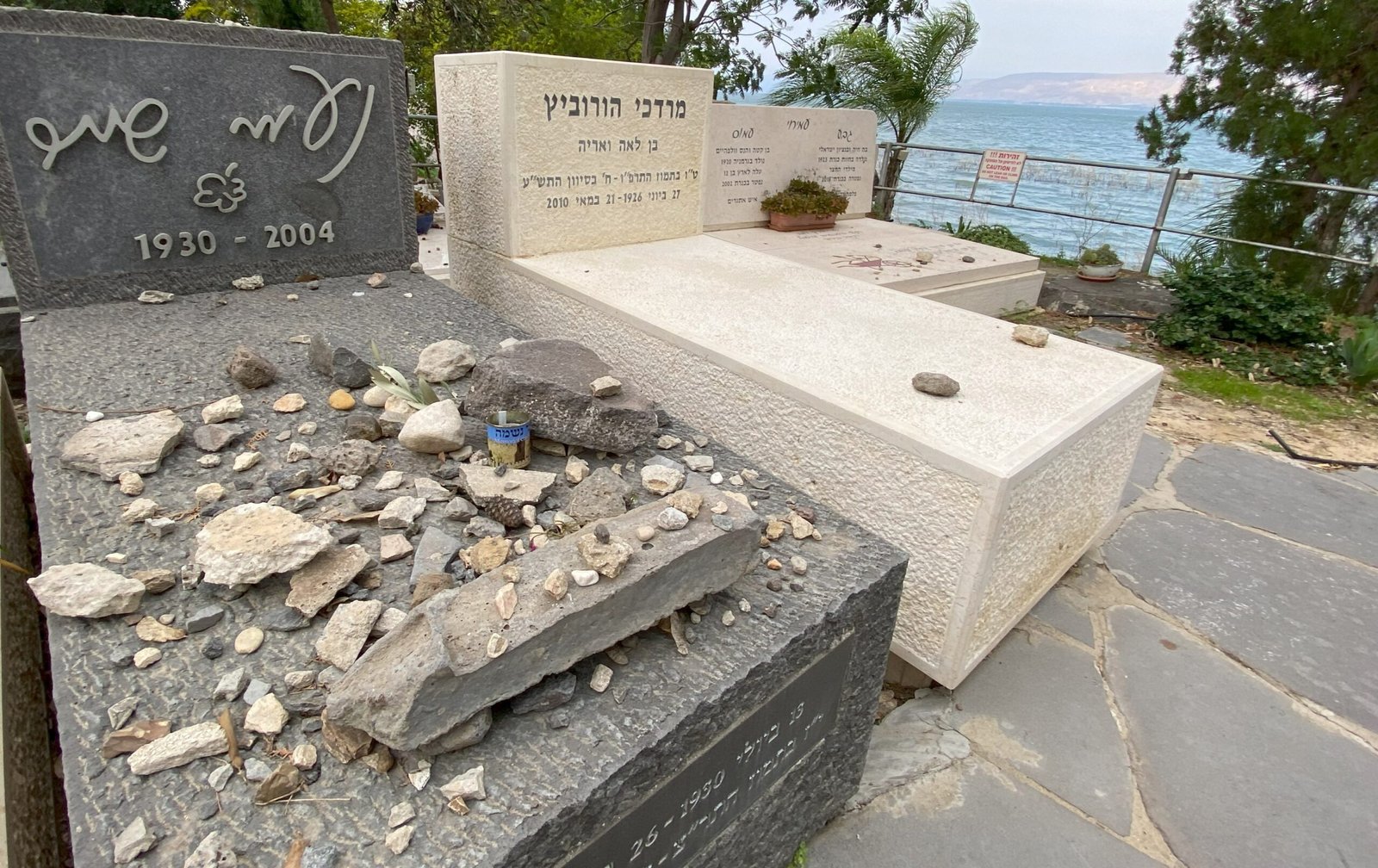
Ehud was born in 1941 as the second son of Rachel and Israel Wiener. Yaron London persuaded him to change his surname to Manor so that he could take part in musical events on Israeli radio. That was the Zionist spirit at the time. His parents had immigrated from Russia. In the song “Yelid HaAretz” – “One Born in the Land” – he thanks his parents for this decision. Today, this text is inscribed on his gravestone in Binyamina.
He was able to express the Israeli attitude to life in an ingenious way. He has undeniably contributed a great deal to the development of the Israeli attitude to life, to “Israeliut”, as they say in Israel. In collaboration with Israeli musicians such as Nurit Fuchs and Matti Caspi, he created songs that have become classics of Israeli pop music. He uniquely combined secular “Israeliut” with traditional Jewish and biblical ideas. This still appeals to many today.
The Author